
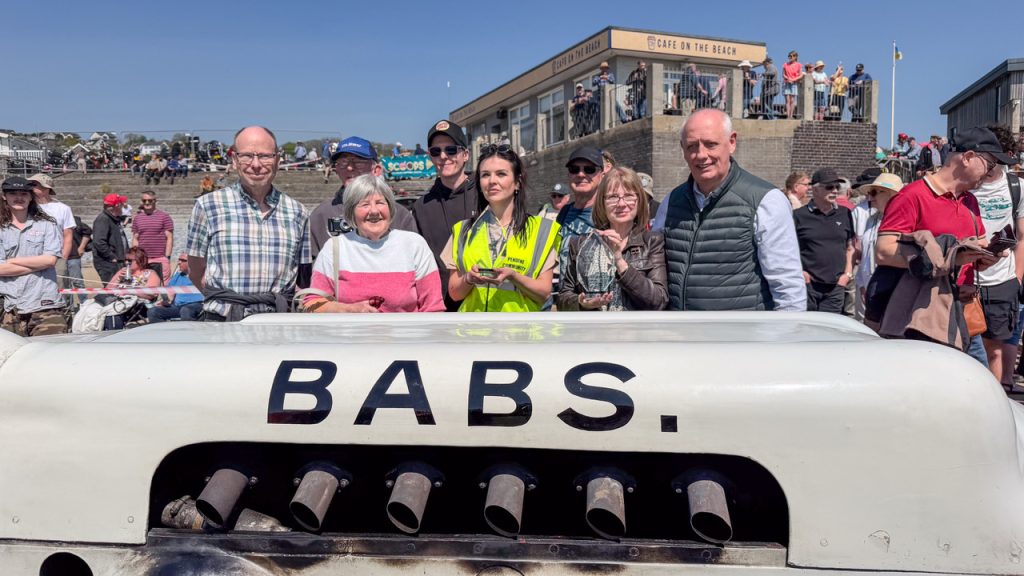
‘Babs’ is back with a crowd-pleasing roar and a celebratory re-run over Pendine Sands
Category:
- Hall of Fame
Speed star Parry Thomas joins the ‘Roll of Honour’
The engine roared, the fans gasped and the sun shone on a perfect day of nostalgia at Pendine Sands on Monday, 27 April.
It was exactly 100 years on from the day that Parry Thomas set the world land speed record on the Welsh beach, taking the fastest time recorded by a human on land up nearly 20 mph to 169. The next day the Wrexham-born Thomas topped 171 mph.
It was an amazing feat achieved by an amazing Welshman. Alas, less than a year later, and driving the same car, ‘Babs’, his life ended on the same beach chasing the same record.
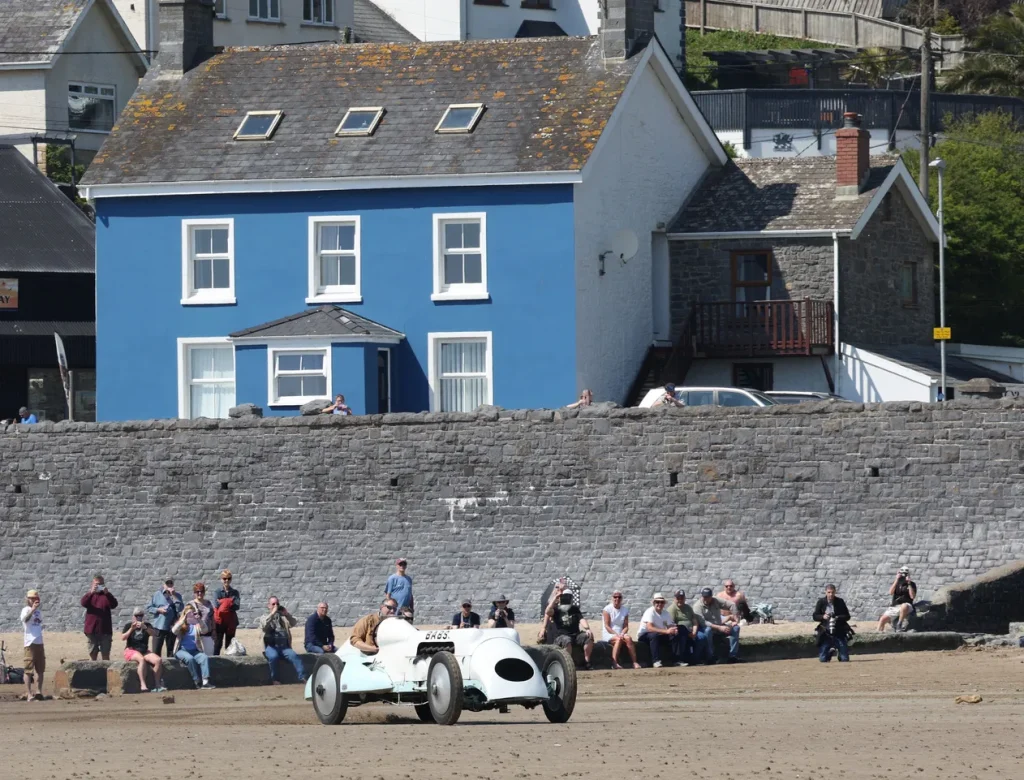
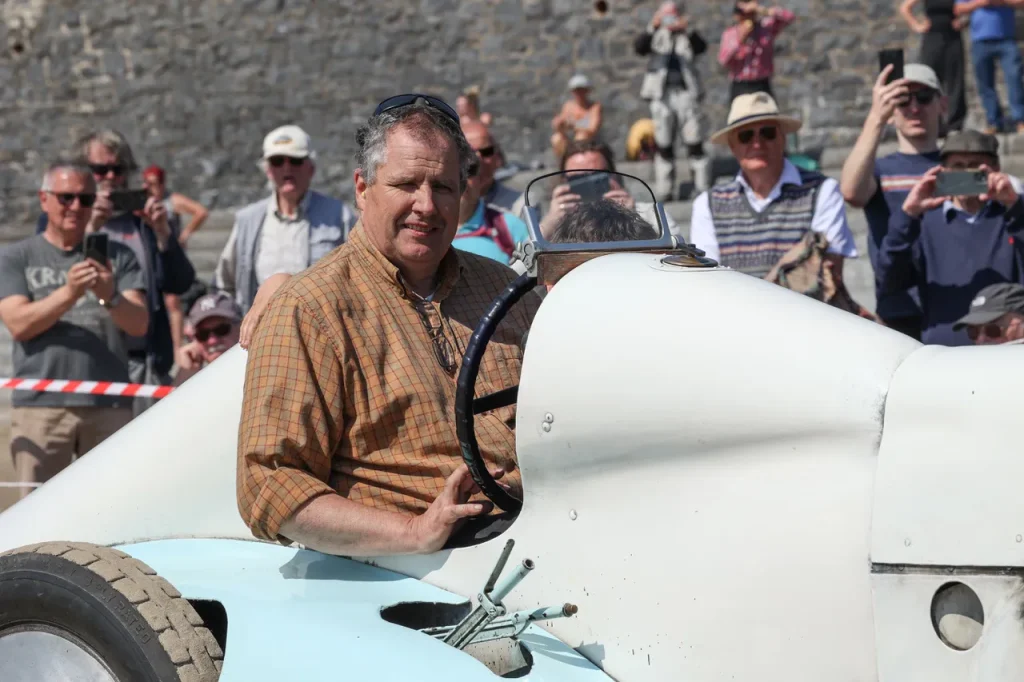
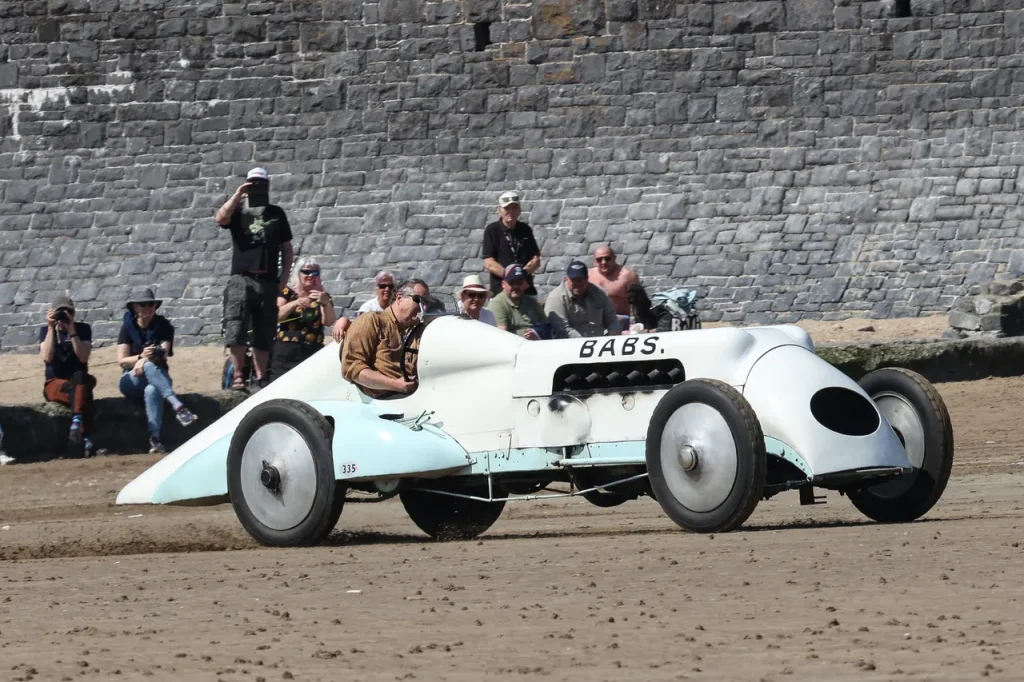
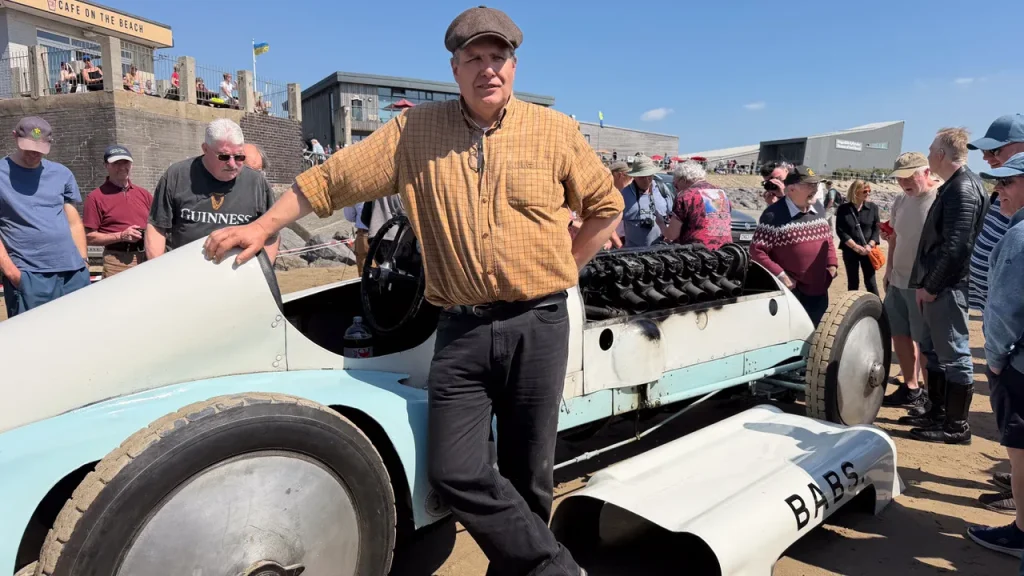
But the return of the original car to the famous venue to celebrate the centenary of the world record turned into a sun-kissed jamboree. Around 3,000 people flocked to the beach to see Geraint Owen, Son of the man who dug up ‘Babs’ 42 years after she had been buried in the sand dunes in the wake of her deadly crash, take her for a trip down memory lane.
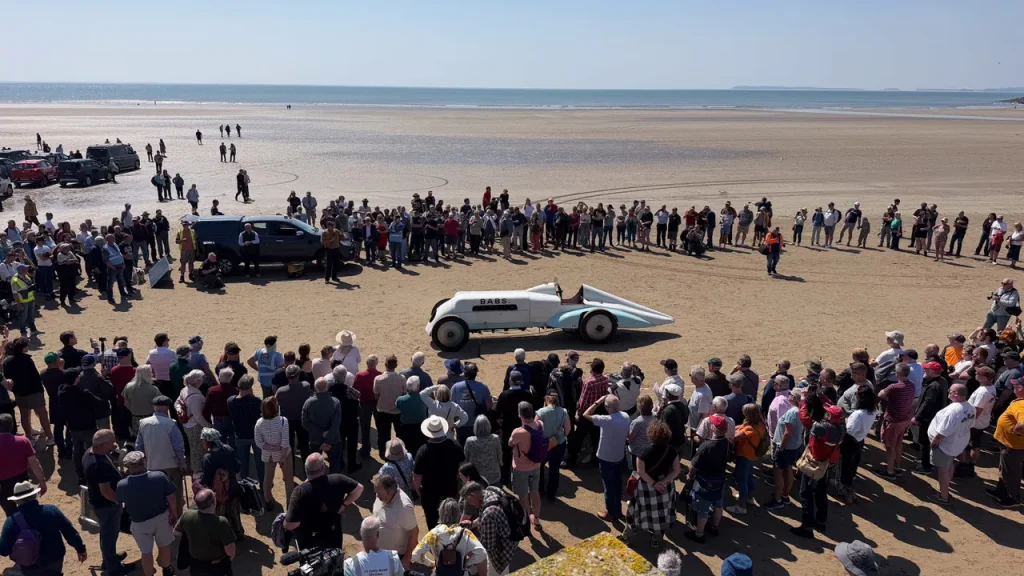
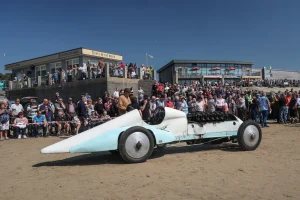
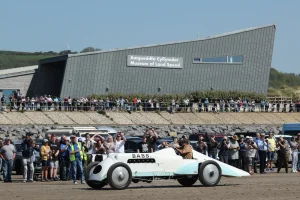
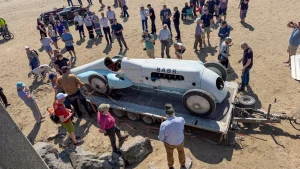
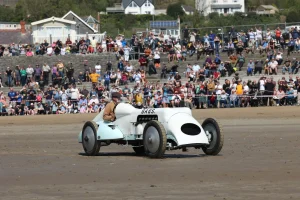
If it wasn’t at 171 mph as in days of old, it was around a more comfortable mark of 35-40 mph. However slow or fast it was, the crowd loved it – and loved being a part of recreating one of the greatest moments in the history of Welsh sport.
And to make it an extra-special occasion, the Welsh Sports Hall of Fame were given permission to join in the celebration and add John Godfrey Parry Thomas to our ‘Roll of Honour’. Entry No 211 onto our exclusive list, his motor racing and land speed record background added a 33rd sport to the list from which our golden greats are drawn.
“What a day it was for Welsh sport and for us at the WSHoF to be able to honour some an outstanding Welshman to our ‘Roll of Honour’. It really was an occasion when we were able to get a flavour of the world record breaking achievements of Parry Thomas way back in 1926,” said WSHoF chair, Phil Davies.
“Our present and future is built on our past and this was another example of us standing on the shoulders of giants. Not only was Parry Thomas a superb driver, lauded in his time as among the best in the world, but he was also an innovative engineer.”
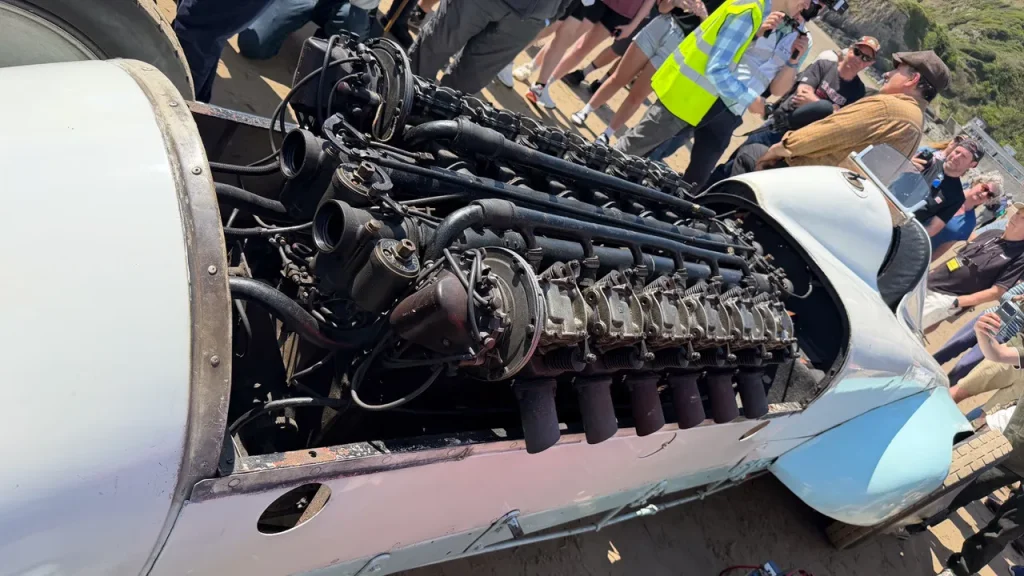
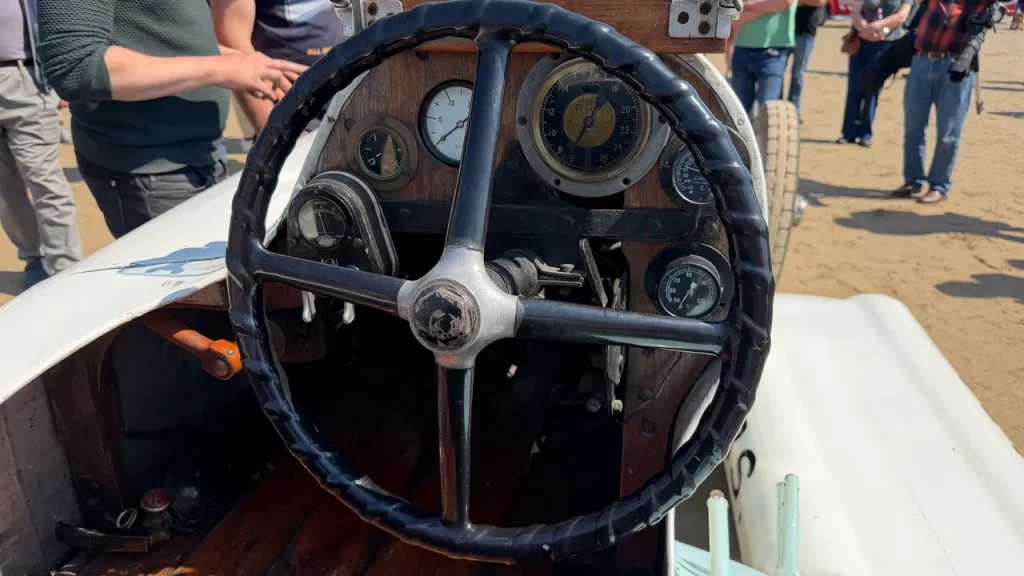
Distant relatives of Parry Thomas were handed one ‘Roll of Honour’ award to take home, while the Pendine Community Council received another to put on display at their Land Speed Museum at Pendine. A third will be heading to Oswestry School, where Parry Thomas is among their most famous alumni, to join a tribute to him.
On the anniversary day the car that was dug up in 1969 by Bangor lecturer Owen Wyn Owen was driven by his son, Geraint. He was only 11 months old when his father stayed true to his pledge to renovate the car that had broken the world record.
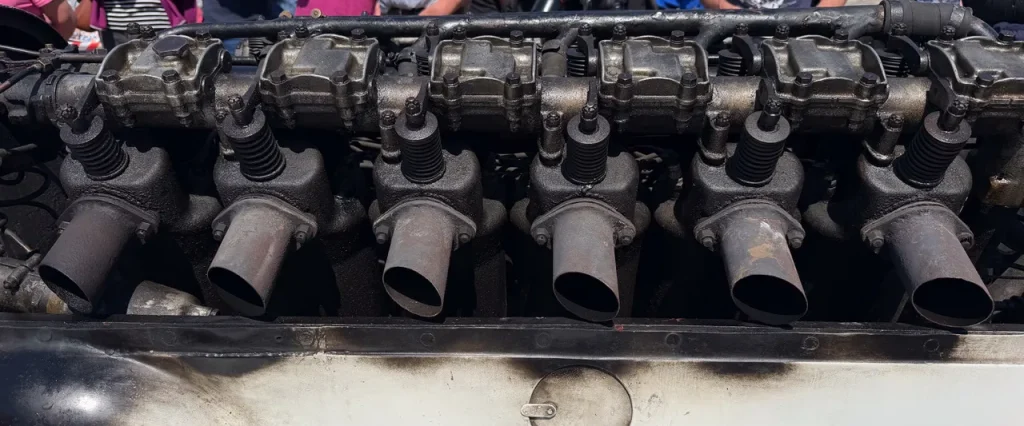
“Parry Thomas was born in Wrexham, grew up near Oswald Street and ended up designing an engine for WW1 aircraft with Leyland Motors. After WW1 he took a job as chief engineer at Leyland and developed a luxury passenger car which out Rolls-Royced the Rolls-Royce. It was called the Leyland 8,” said Geraint Owen.
“It was during his time with the Leyland 8 project at Leyland’s that he took one of the cars to Brooklands to test it round the track. And like every young man, once you get a taste for going motor racing, you get a taste for going motor racing!
“In a very short period of time he’d left Leyland, taken two Leyland 8 chassis with him and had moved into a bungalow in the centre of the track at Brooklands. He then spent the next three to four years working, designing, building and developing race cars.
“At the time of his death in the 1920s he was one of the most successful drivers in the UK. He was always fighting it out with Malcolm Campbell in races at Brooklands and also doing the same in competition for land speed record.
“His record in 1926 was 171 mph, and they reckon he might have been doing 180 mph a year later when he had the crash. It could probably do 130 mph now – strangely it’s fine when you’ve got your foot down.
“It’s when you take your foot off the gas that it all gets a little bit sketchy. Then it’s a bit like a pig on casters.
“In 1926 he did 169 mph on the first day. In the afternoon he drained the tank from the special fuel and put ordinary pump petrol that everybody in the street could use, just as a thank you to Shell, one of his backers.
“He did 160 mph, which was still higher than the land speed record that had been set previously. Then the following day he came back and did 171 mph. Now if you put that into context, the air speed record had previously been broken about 18 months before and had only just gone over 200 mph.
“That was as fast as humans had ever been known to travel. So, apart from the two or three people who’d been faster in an aircraft, that was the fastest any human had been on land.
“It was an amazing sporting achievement as well as an amazing feat of engineering. What’s fascinating is that in many ways this wasn’t his car.
“This car was built by Louis Zbrowski and was essentially the fourth of his ‘Chitty Chitty Bang Bang’ cars. Parry Thomas developed it and made it go even faster.
“At the time he was building his own Grand Prix car, which was going to be considerably more technically innovative than a Grand Prix Bugatti. But sadly, before it really reached its full potential in 1927, he was killed and the development work stopped.
“When the Thomas Grand Prix car finally emerges from restoration in the next week or two it will be something that people look at and go, oh, now that was innovative.”
While the world awaits the unveiling of Geraint Owen’s restoration of the Grand Prix car, Parry Thomas is once again the name on the lips of everyone in Pendine and across Wales.
And now his name is adorned among the greatest of the great Welsh sportsmen and women included on the WSHoF ‘Roll of Honour’.
Thank you to Photographer Syd Wall & Celf Creative.